Why the 'Hidden' Materials in Your Roofing Sheets Dictate Project Success
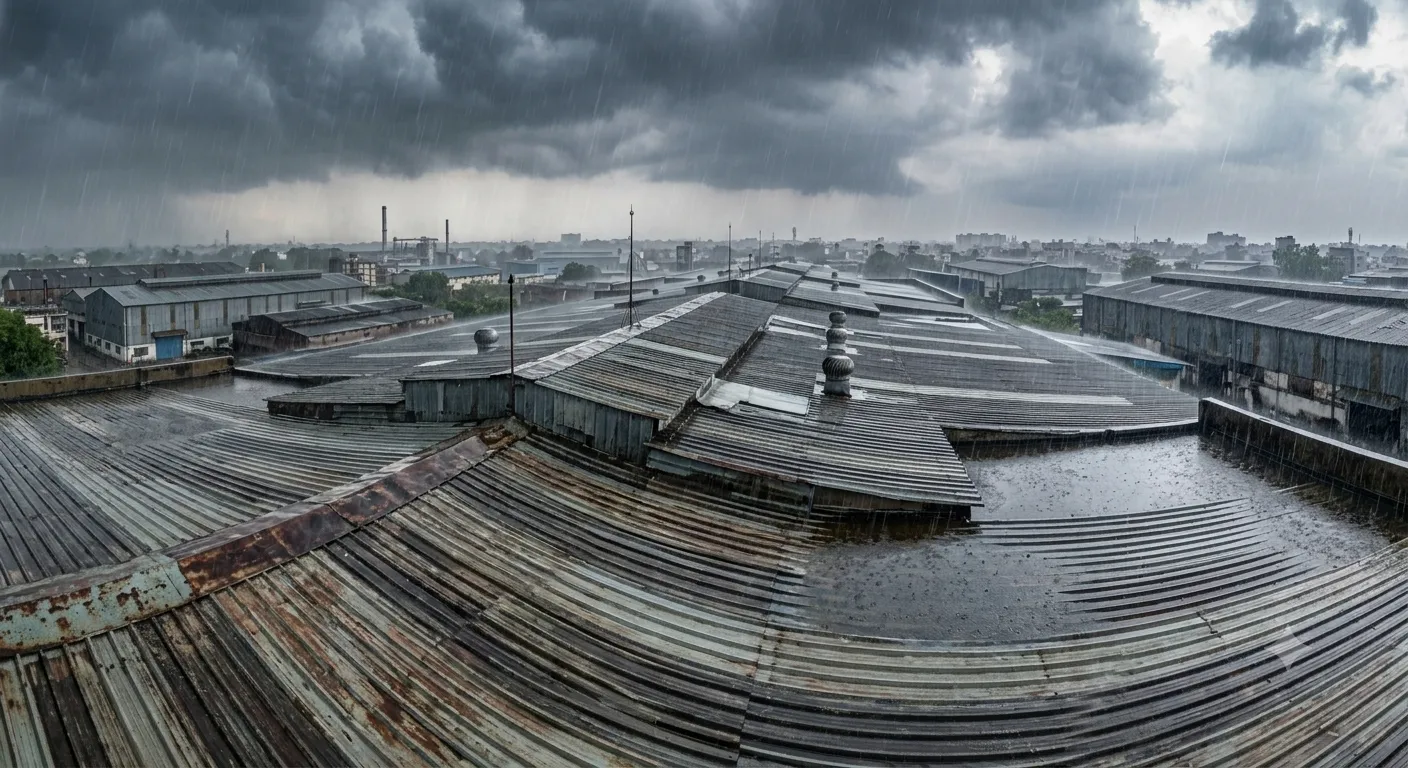
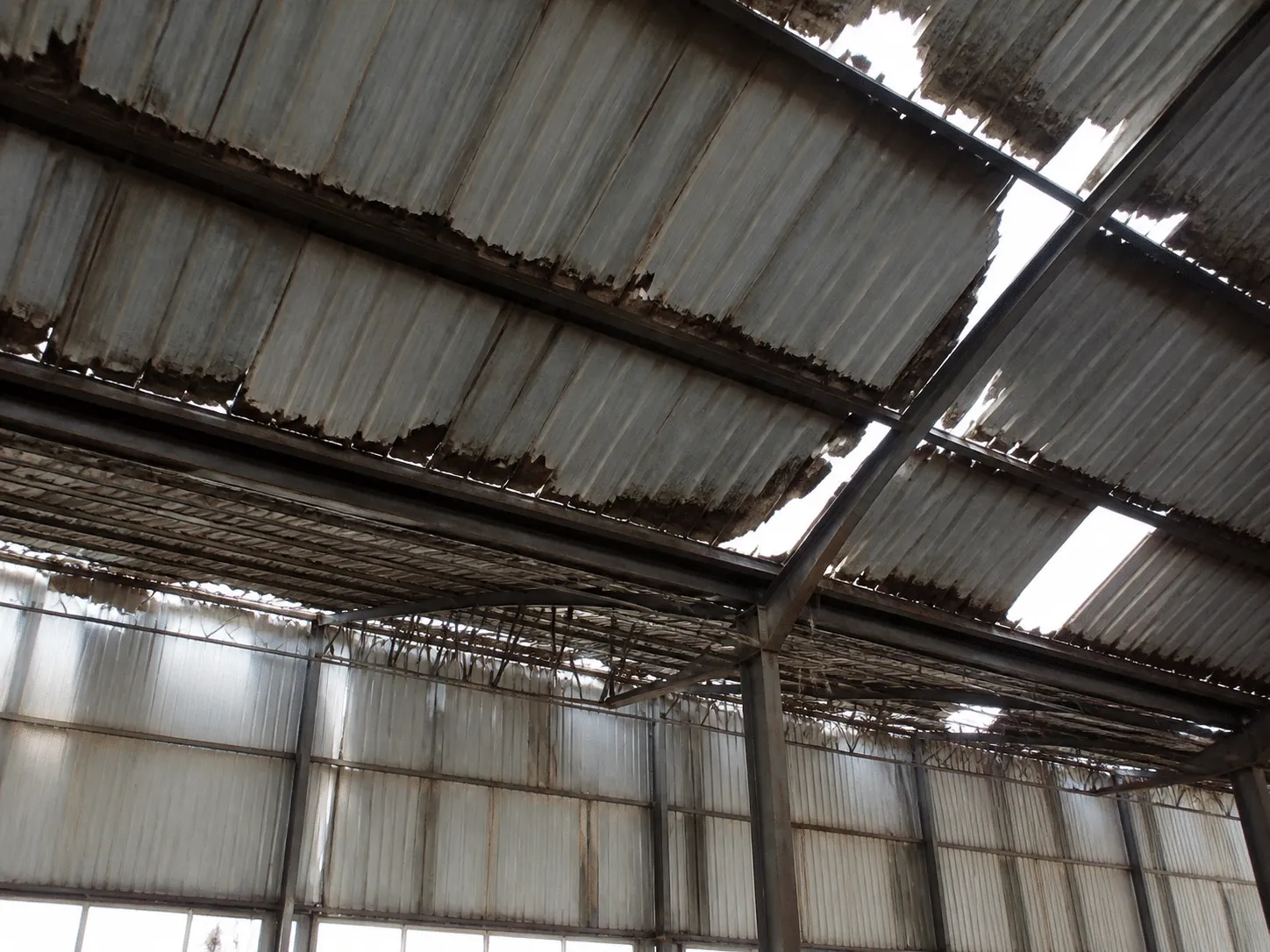
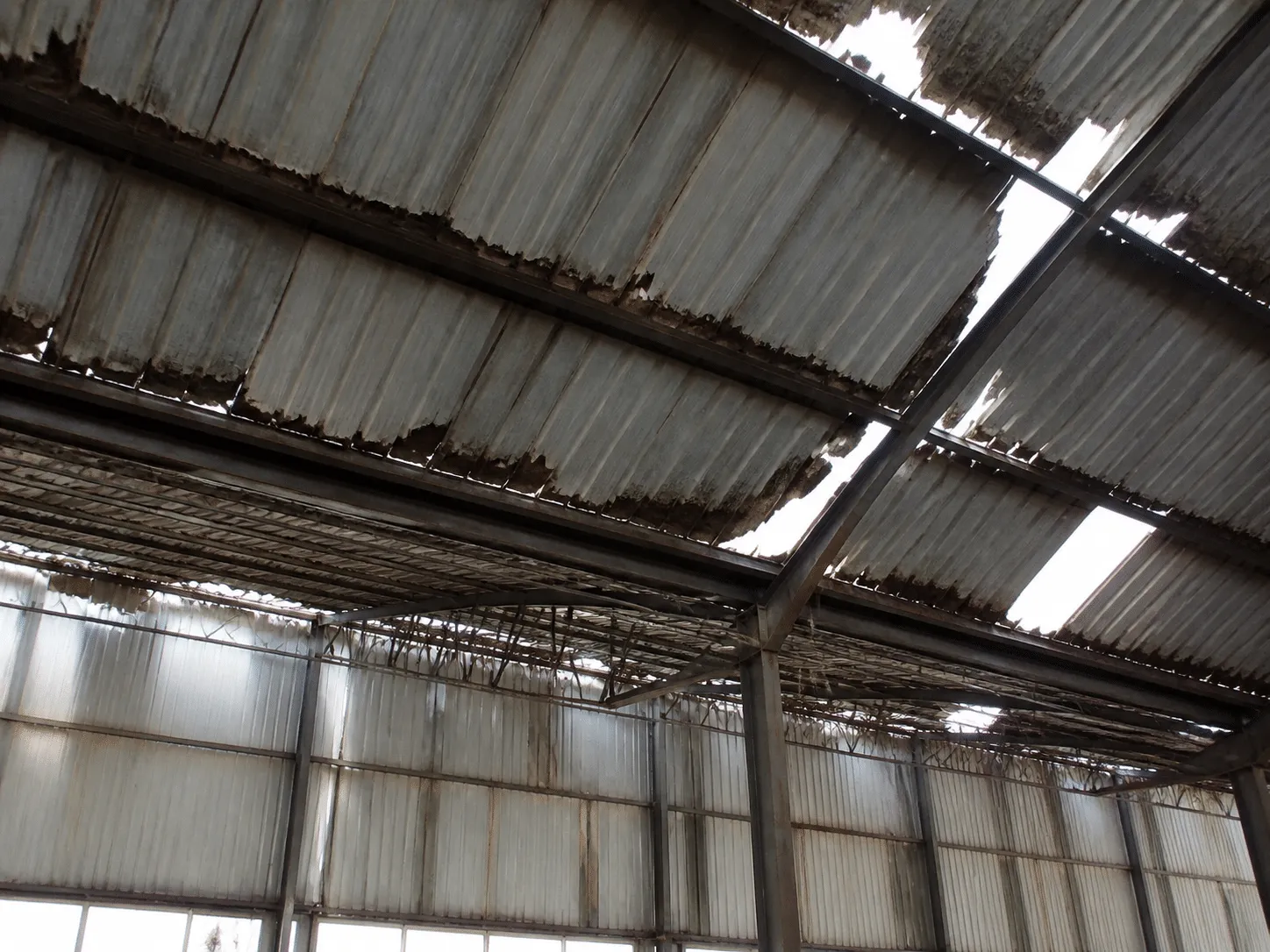
Picture this. Your crew is halfway through a warehouse roof, and the sheets start showing rust spots at the cut edges. Before the building is even handed over. Now you're stuck with delays, angry clients and a budget that just got a lot bigger.
I've heard some version of that story more times than I can count.
The cause is usually hiding in plain sight. Poor material choice. One research review lists thin or non-compliant steel, weak coatings and badly specified sheets as top reasons roofs fail early in Indian commercial and industrial buildings. And the cost doesn't stop at the roof. A maintenance study of buildings under 25 years old tied 13% of upkeep costs to repairs caused by defective materials. (That study isn't India-specific, but the cost pattern is the same.)
Why colour coated sheets keep winning
Here's the good news. Colour coated roofing sheets are a smart fit for modern Indian construction. They're strong, light, quick to install and come in plenty of colours. India's metal roofing market is forecast to grow at more than 8.42% a year from 2026 to 2031, helped by factories, warehouses and commercial builds. So builders clearly like them.
But not every sheet is built the same. Two sheets can look identical on the truck and age very differently on the roof.
What this guide will do for you
If you're a builder, contractor or procurement manager, you shouldn't have to guess. This guide breaks down what's actually inside a good sheet: the steel, the metal coating, the primer and the top coat. Once you know that, you can ask sharper questions and compare quotes properly. That matters whether you're sourcing from a colour coated roofing sheet manufacturer in Kanpur or anywhere else in Uttar Pradesh.
Let's start by cutting a sheet open, at least on paper.
The Anatomy of a Modern Colour Coated Sheet: A Multi-Layered Defence System
Ever peeled an onion and found it just keeps going? A good roofing sheet is a bit like that. Except nobody cries, and every layer has a job.
It's a System, Not One Material
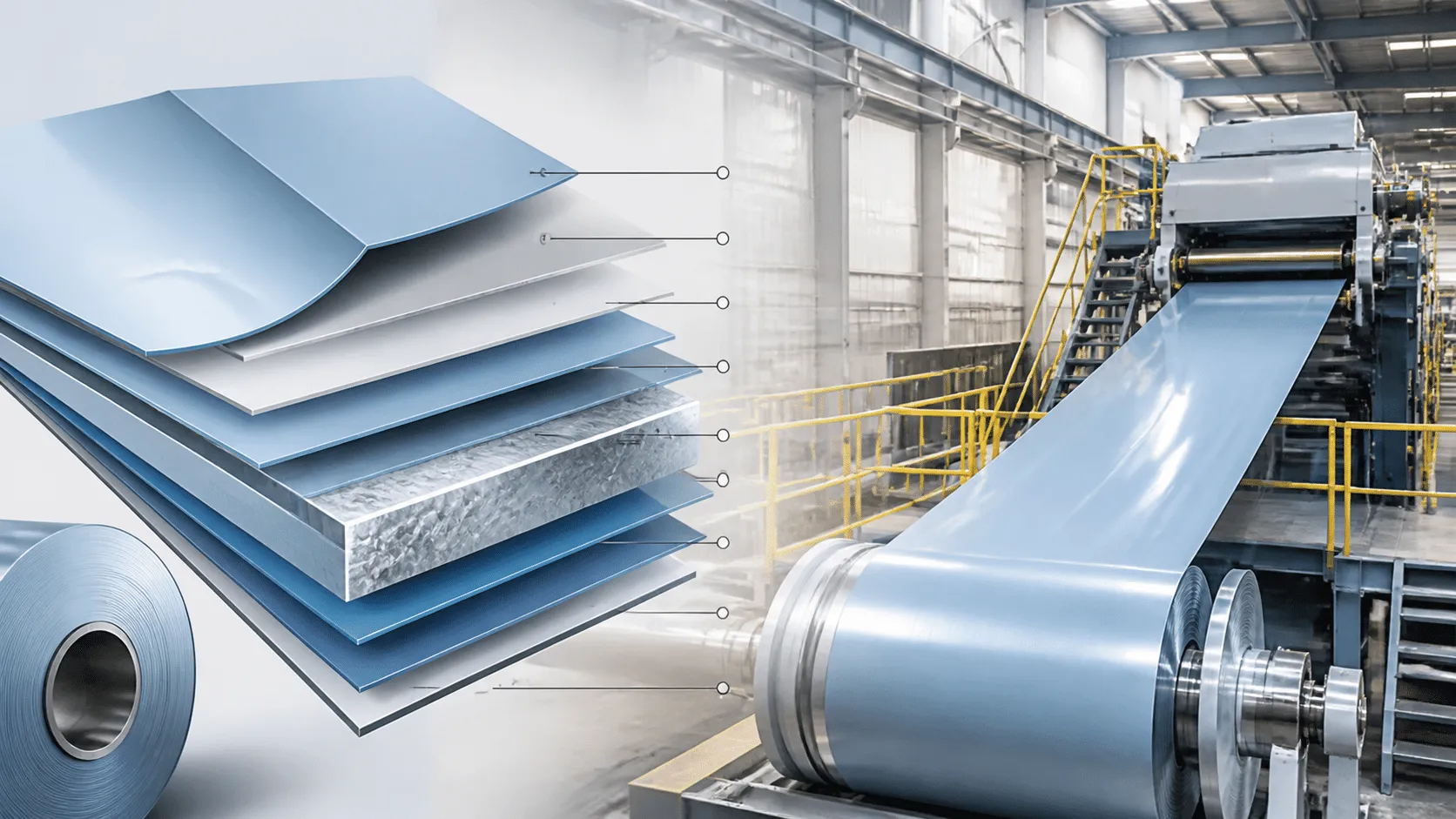
Most people look at a colour coated sheet and see coloured steel. That's the paint talking. Underneath sits a stack of very thin layers, and each one is built to stop a different kind of damage. Water, sun, salt, scratches. Different enemies, different layers.
Pull one out and the others have to work overtime. Sometimes they just can't.
That's why the colour coated roofing sheet materials matter more than the shade you pick from the catalogue.
The Five Layers, From the Inside Out
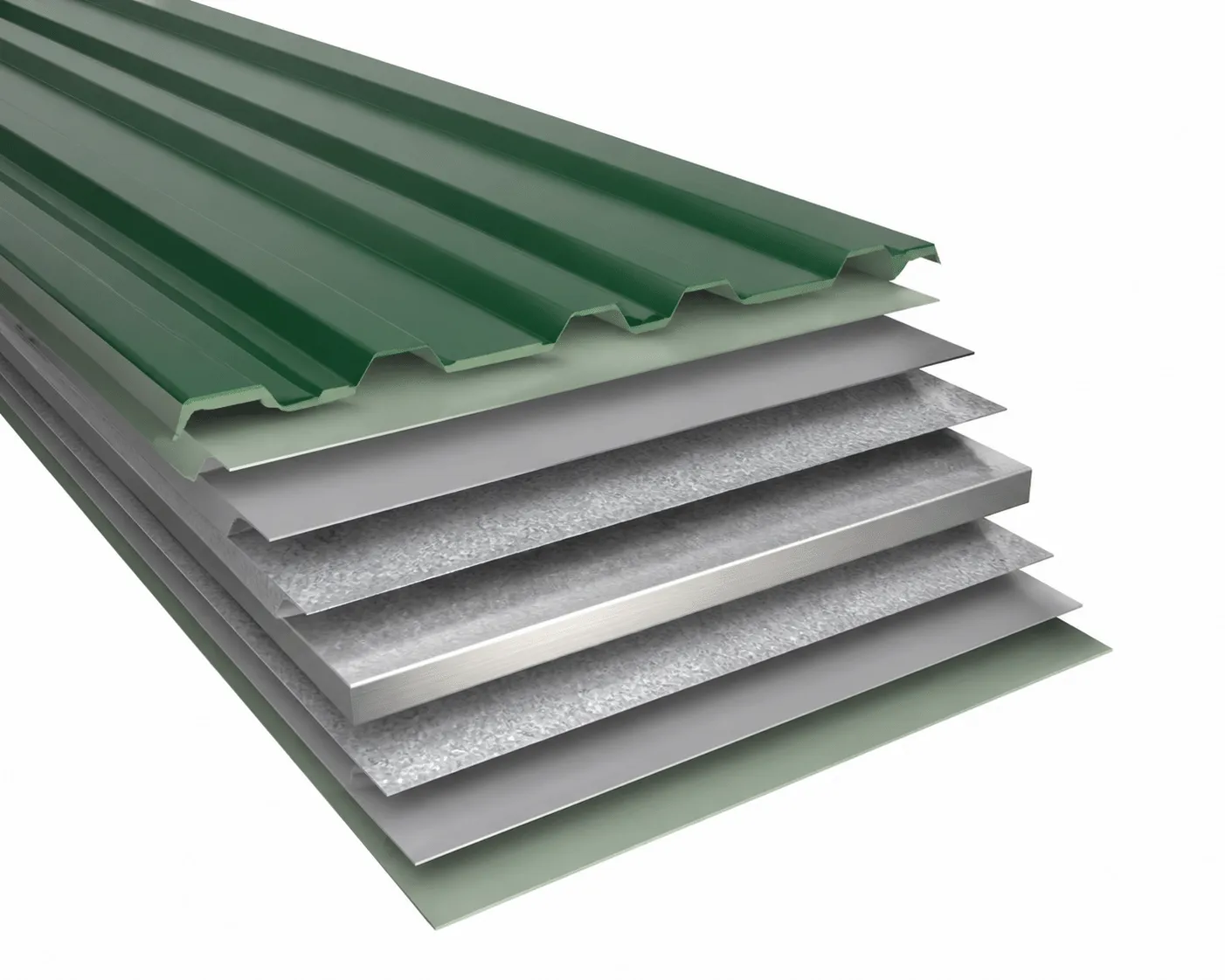
Here's the cross-section on paper. Picture it as a sandwich with the steel in the middle.
Layer | What it is | What it does | What goes wrong if it's weak |
|---|---|---|---|
1. Base metal | Steel core | Gives the sheet its strength and shape | Dents, sagging, poor load handling |
2. Metallic coating | Zinc (GI) or aluminium-zinc (PPGL) | Fights rust, even when the surface gets scratched | Red rust, especially at cut edges |
3. Pre-treatment | Thin chemical layer | Helps paint grip the metal | Peeling and blistering |
4. Primer coat | First paint layer | Bonds the topcoat and adds corrosion defence | Delamination, early paint failure |
5. Top coat | Coloured paint (RMP, SMP or PVDF) | Blocks sun, rain and fading | Chalking, fading, rough surface |
There's also a thin back coat on the underside, which protects the inner face of the sheet. Small detail, but it counts.
How thin are we talking? Product literature, like this JSW brochure, usually shows a topcoat of around 20 to 25 microns and a primer of up to 7 microns. A micron is one thousandth of a millimetre. So these layers are far thinner than a human hair, yet they decide whether a roof lasts or fails.
Why Every Layer Has to Pull Its Weight
Here's the thing. A premium topcoat can't save a sheet with a thin metallic coating. And a great metallic coating won't help if the pre-treatment was rushed and the paint lets go in sheets.
The layers share the load. Quality in one doesn't make up for shortcuts in another.
That's also why two sheets can look the same on the truck and age very differently. You can't see coating mass or pre-treatment with your eyes. You find out later, usually in the monsoon. Whether you're looking at RSG Profile Sheets or any other supplier, the smart move is asking what's in each layer, not just how it looks.
Next up, we'll start at the bottom of the stack with the steel itself, because everything else sits on top of it.
The Foundation of Strength: Choosing the Right Base Metal (GI vs. PPGL/Galvalume)
Here's something that surprises a lot of buyers. The steel core is often the same in both options. What changes is the thin metal jacket wrapped around it. And that jacket decides how your roof handles a Kanpur monsoon.
Two Metal Jackets, Two Different Jobs
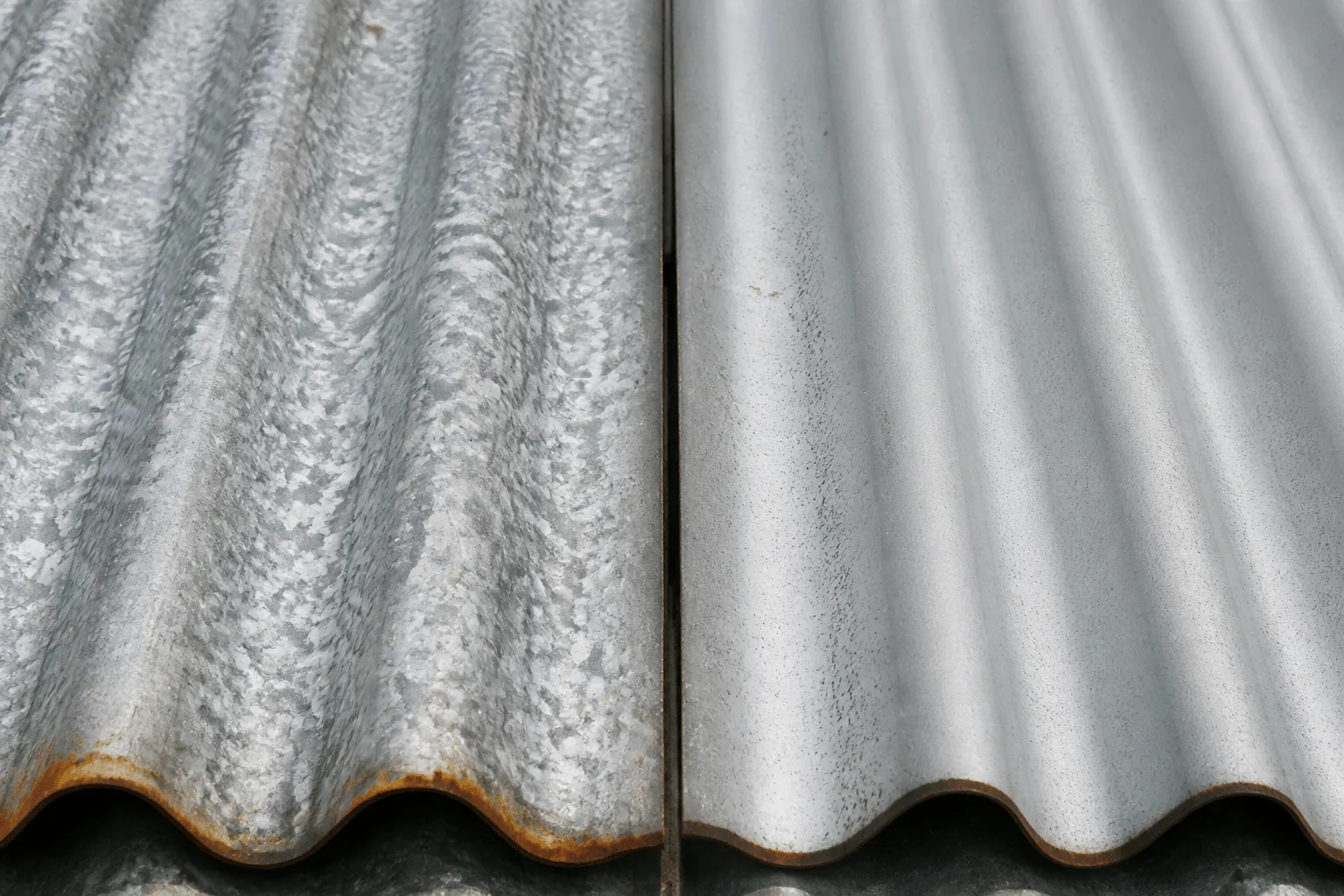
Galvanized steel (GI) is coated in zinc. Zinc is a bit of a bodyguard. When a scratch exposes the steel, the zinc corrodes first and takes the hit. That's why galvanized steel roofing sheets in UP have been a go-to for decades.
PPGL, also called Galvalume, uses a different recipe. Supplier data on the common coating lists 55% aluminium, 43.4% zinc and 1.6% silicon. That's the heart of PPGL sheet composition. The aluminium builds a tight barrier against moisture and salts, while the zinc still protects cut edges. Silicon helps the coating stick when the sheet gets formed.
You'll often see "AZ150" on quotes. It means 150 grams of coating per square metre, counted across both faces. Roughly 75 grams per side.
GI vs. PPGL for Indian Conditions
Factor | GI (zinc coated) | PPGL (aluminium-zinc coated) |
|---|---|---|
Corrosion resistance | Fine for dry, inland sites. Weaker in humid, polluted or coastal air | Stronger against humidity, fumes and salt air |
Lifespan | Shorter, often needs recoating or earlier replacement | Often claimed at 2 to 4 times longer (supplier claim, ask for test data) |
Cost | Lower upfront | Roughly 15% to 45% more on raw sheet listings |
Weldability | Welds easily, but zinc fumes and burnt coating need touch-up | Weldable with care, coating needs repair afterwards (most roofing sheets are screwed, not welded) |
Best for | Dry-zone sheds, farm buildings, short-term structures | Warehouses, factories, commercial complexes, buildings near chemical fumes |
About that cost gap. October 2026 marketplace listings show GI sheet at about ₹50 to ₹60 per kg, while PPGL listings run around ₹77 to ₹85 per kg. Those are asking prices, not mill rates. So treat them as a rough guide only.
So Which One Should You Pick?
Let's be honest about the "2 to 4 times" line. You'll hear it from plenty of suppliers. I couldn't find independent Indian field tests that prove one fixed number. Real life depends on paint, drainage, fasteners and how the sheets get cut and fitted. So ask for written test reports before you believe any multiplier.
What the evidence does support is the pattern. One 2026 roofing guide suggests AZ150 or higher for exterior industrial use, and notes that salt-laden air speeds up corrosion.
For a Kanpur factory, which is inland, GI can still make sense where humidity and fumes stay moderate. But if you've got process fumes, constant condensation or a long gap between maintenance visits, PPGL usually wins on lifetime cost. It's also the safer call for durable roofing materials for industrial use. For trapezoidal profile sheets, a PPGL core is generally the best material when the roof needs to last. RSG Profile Sheets, for example, lists PPGL products in AZ-70 and AZ-150 coatings, so you can match the coating mass to the job.
The base metal is only half the story, though. Next, we'll look at the paint on top.
More Than a Layer of Paint: Understanding Primer and Top Coat Systems
Here's a mistake I see all the time. Buyers argue about the top coat for an hour and never ask about the primer. But the primer is the quiet worker holding the whole paint job together.
Why the Primer Is Non-Negotiable
Think of primer as double-sided tape. One side grips the metal. The other side grips the colour coat. If either grip is weak, the paint lifts.
It also fights rust from the inside. Water can sneak through tiny scratches or pinholes in the top coat. A good primer, often epoxy or polyurethane based, slows that water down so it can't creep under the paint and eat the metal. That creeping rust is called under-film corrosion. You don't see it until the paint starts bubbling. By then it's spreading.
So skip the "just paint" mindset. A thin or badly cured primer can ruin a premium top coat.
RMP, SMP and PVDF Side by Side
The top coat is what faces the sun, rain and dust. Three systems cover most Indian roofing orders:
RMP (Regular Modified Polyester): The budget option. Fine for short-life or low-exposure buildings.
SMP (Silicon Modified Polyester): Silicon makes the paint tougher and slower to fade. It's the popular middle ground.
PVDF (Polyvinylidene Fluoride): The premium pick. It handles UV, chalking and harsh air best.
One JSW product sheet lists indicative durability of 8 years for RMP, 10 for SMP and 15 for PVDF. Treat those as supplier guidance, not promises. Real life depends on colour, thickness and weather.
Feature | RMP | SMP | PVDF |
|---|---|---|---|
Durability | Shortest | Medium | Longest |
Colour retention (fade resistance) | Fair, fades sooner | Good | Best |
Flexibility | High | Medium to high | Good |
Chemical resistance | Low | Medium | Highest |
Cost index | Low | Medium | High |
This is a general guide. Brands differ, so check each paint's data sheet.
Picking the Right System for Your Roof
Ask four quick questions.
How strong is the sun? Uttar Pradesh gets harsh summer UV. Dark colours fade fastest, so pair them with SMP or PVDF.
How dirty is the air? Near fertiliser units, tanneries or chemical plants, go PVDF over a corrosion-resistant primer. Even then, ask a coating supplier to review the actual fumes. PVDF alone isn't a cure-all.
How long must it look good? A temporary shed can live with RMP. A showroom or factory frontage probably can't.
What's the budget? SMP is often the sweet spot for warehouses and general industrial roofs, which is why a PPGL profile sheet from RSG Profile Sheets can come with an SMP coating.
Whatever you choose, get the paint chemistry, primer type and thickness written on the quote. And find out whether the warranty covers fading, corrosion, or both.
Paint is only part of the story, though. Next, we'll see how these specs play out on an actual roof.
How Material Specifications Translate to On-Site Performance and ROI
Here's where the science meets your budget. You can know every layer by heart, but if it never shows up on a quote or a site report, it doesn't pay you back.
From Coating Chemistry to Total Cost of Ownership
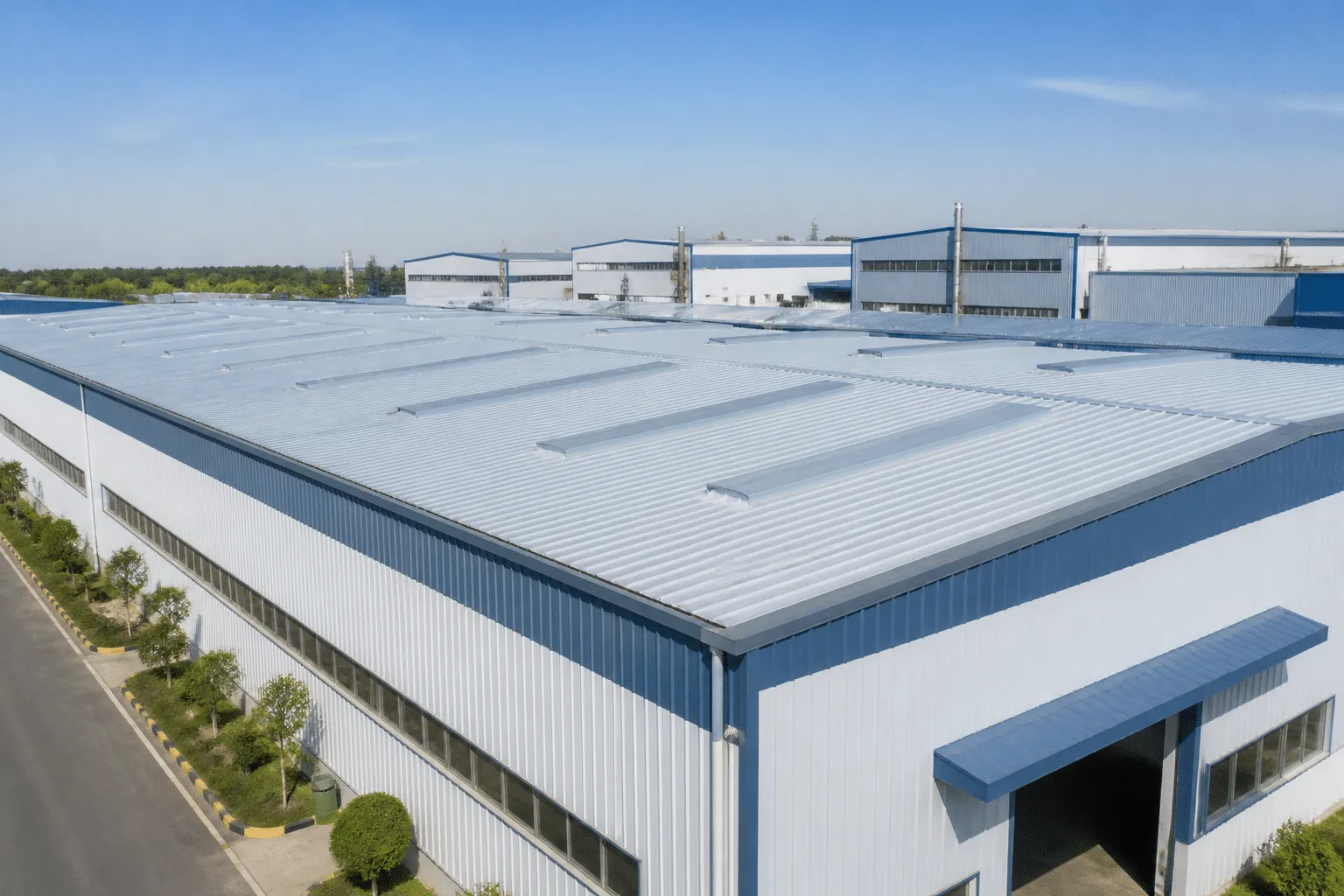
Let's connect the dots. A PPGL base with an SMP top coat usually costs more on day one. But it tends to need less repainting, fewer corrosion repairs and fewer shutdown days. That's what "total cost of ownership" really means: what you pay over 25 or 30 years, not what you pay at the gate.
I'll be upfront. Hard numbers for Indian colour coated roofs are thin on the ground. One 2026 industry estimate claims a 30-year colour coated roof can cost about 40% less to own than galvanized steel that needs recoating in year 12 and replacement in year 20. That's a supplier-side claim, not an audited study. So use it as a quotation benchmark, not gospel.
Here's a simple way to compare bids:
What to compare | Why it moves your ROI |
|---|---|
Coating mass (Z or AZ grade) | Decides how long before rust appears at cut edges |
Paint system (RMP, SMP, PVDF) | Decides repainting dates and fading |
Base metal thickness (BMT) | Decides dents, sagging and fastener grip |
Warranty terms | Decides who pays when something fails |
The cheapest sheet is rarely the cheapest roof. The best deal is the lowest cost per year of service.
Why a Written Spec Sheet Is Your Best Protection
Now the pain point many of you raised. Quality that changes from one delivery to the next.
A detailed material spec sheet is your shield. It turns "good quality" into numbers someone can be held to. One buyer guide style checklist usually covers the same basics, and so should yours:
Base metal thickness, and whether it includes paint and coating
Metallic coating mass, like AZ150
Primer and top coat type, with thickness
Colour code and gloss
Batch-specific mill test certificate with a coil number
Why does this matter? Because common shortcuts are invisible. Under-gauging, thinner paint, a cheaper paint swapped in quietly. None of that shows from the truck. But it shows in the paperwork, or in the lack of it. If a certificate has no heat number, lists only "nominal" values or doesn't match your purchase order, question it right away.
So write the spec into the purchase order. Then check each delivery against it.
Indian Standards: Compliance Without the Headaches
For government jobs and large private projects, compliance isn't optional. It's often the first thing an inspector asks about.
The main Indian standard for pre-painted roofing steel is IS 14246. The 2024 revision sets minimum paint thicknesses of 4 microns for primer and 15 microns for the finish coat on Classes 2 to 4, plus a 4 micron back coat. Older 1995 wording asked for at least 20 microns on top. Many makers list 20 to 25 microns on top anyway, which is why you must ask which version, and which class, a quote follows. (Metallic coating mass is covered separately, so check that too.)
So what do you ask for? A BIS conformity claim you can verify, ISO 9001 certification and recent lab reports. Remember, ISO 9001 shows a quality system exists. It doesn't prove every sheet hits your thickness.
This is also where RSG Profile Sheets fits a typical buyer. Spec-level details like SMP coating, AZ-70 or AZ-150 coating mass and tensile strength are the kind of fields you can line up against your drawings.
A quick video that compares a high-grade coating with a weak one over time would be a great way to see fade and edge rust play out. Until then, the paperwork is your best preview.
Next, let's talk about the questions to put to your supplier before you sign.
Partnering for Success: Key Questions for Your Colour Coated Roofing Sheet Manufacturer in Kanpur
You now know what goes inside a good sheet. Great. But knowing it and getting it delivered are two different things.
The next step happens on a phone call or across a desk. And the buyer who asks sharp questions usually gets sharper answers.
Questions About the Metal and the Paint
Start with the layers we've already covered. Don't ask "Is it good quality?" Everyone says yes to that.
Ask for numbers instead. What is the exact coating mass, in grams per square metre (GSM), on the metallic layer? Is it AZ70, AZ150 or something else? Which paint system is on top, and is it RMP, SMP or PVDF? Can you send the datasheet for that paint? And does the stated thickness mean the top coat alone or the whole paint stack?
A good supplier answers these fast. A vague one says "don't worry, it's standard." Worry a little.
Questions About Testing and Paperwork
This is where you find out if quality is a habit or just a sales line. Ask what internal checks they run on every batch. Look for answers covering paint thickness, adhesion, flexibility and coating mass. The BIS compendium lists impact, cross-hatch, solvent resistance, salt spray, gloss and colour tests as controls for pre-painted sheets, so those are fair things to bring up.
Then ask about certificates. A Type 3.1 mill test certificate records tests on the actual material you're getting, not a general claim. Ask if each delivery comes with one, tied to a coil number. Also ask what the warranty covers. Fading, corrosion, or both?
Your Procurement Checklist
Print this table. Take it to the meeting. Tick as you go.
Topic | Question to ask | A good answer sounds like |
|---|---|---|
Metallic coating | What is the exact GSM or AZ grade? | A clear number, written on the quote |
Base metal | Is thickness BMT or total coated thickness? | A straight answer, plus a micrometer reading |
Paint system | RMP, SMP or PVDF? Can I see the datasheet? | Named paint, brand and thickness on paper |
Primer | What type and how thick? | Epoxy or similar, with a micron figure |
Quality control | How do you test adhesion and thickness? | A routine per batch, with records |
Certificates | Do I get a batch MTC with coil number? | Yes, with each delivery |
Standards | Which IS 14246 version and class do you follow? | A specific version, not "as per standard" |
Warranty | Does it cover fading and corrosion? | Written terms, with limits spelled out |
Samples | Can I test a sample before a big order? | Happy to help |
Why Local and Transparent Wins
Here's something paperwork can't show you. How the supplier acts when you ask hard questions.
A local maker is easy to visit. You can walk the coil store, watch the roll forming and ask to see test records. A manufacturer such as RSG Profile Sheets, based in Dada Nagar Industrial Estate in Kanpur, is close enough for that kind of check. Faster dispatch and easier site support are bonuses (and honestly, a big deal when a crew is waiting).
The best partners don't dodge. They show you the datasheet, the lab record and the warranty, even when the answer is "that one costs more."
One last step is left: putting all this to work on your next roof.
Building with Confidence: Your Next Step to a Durable and Reliable Roof
So here's the whole story in a few lines. A colour coated sheet doesn't last because of its shade. It lasts because of what's under the shade: the steel, the metal coating, the primer and the top coat, all working as a team.
Get one of those wrong and the roof pays for it later. Usually in the monsoon. Usually after the handover.
The good news? You now know what to ask for. Coating mass in writing. Paint system named on the quote. A batch certificate with a coil number. Warranty terms you can actually read. Those four things alone put you ahead of most buyers.
But paperwork only goes so far. The best protection is a manufacturer who's happy to show you the numbers, even the awkward ones. That's how you cut risk and keep a project on track (and keep clients smiling).
If you're building in Kanpur or anywhere in Uttar Pradesh, RSG Profile Sheets is worth a call. Their team can talk through PPGL and GI options, share detailed spec sheets and price your roof against your own drawings. Bring your roof area, thickness, coating needs and delivery location. They'll take it from there.
No guesswork. Just a roof that's built to last.