Choosing the Right Roofing: A Critical Decision for Modern Construction in Uttar Pradesh
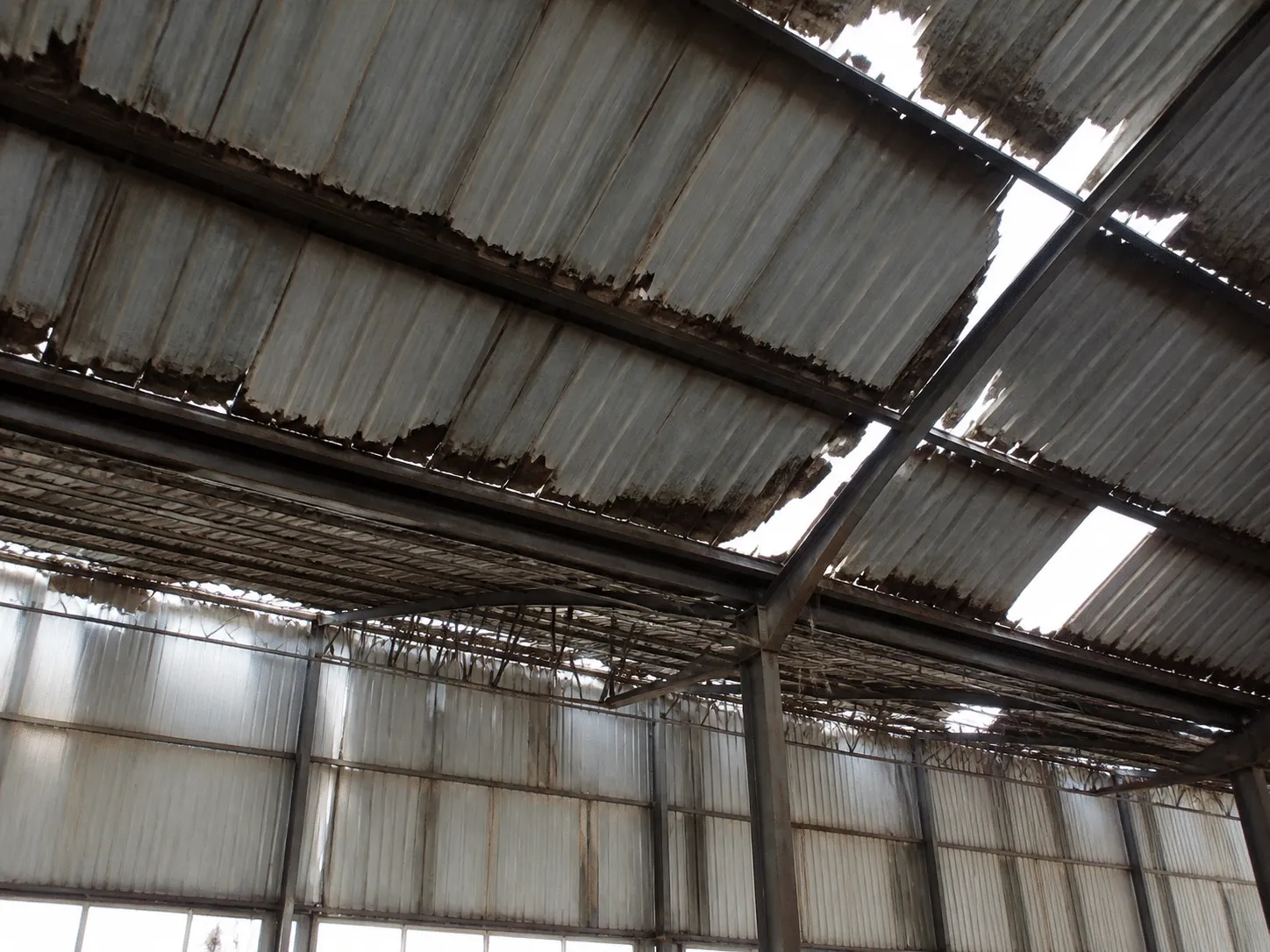
Picture this. It's the middle of July, the monsoon has been hammering your site for nine days straight, and a supervisor calls to say water is dripping through a roof you finished only last year. Not fun.
Roofing choices feel small when you're buried in tender papers. But they aren't. A roof takes the sun, the dust, the heavy rain and the pollution, all year, for decades. And in a place like Kanpur, that's a lot to ask of one material.
The Choice Every Builder Faces
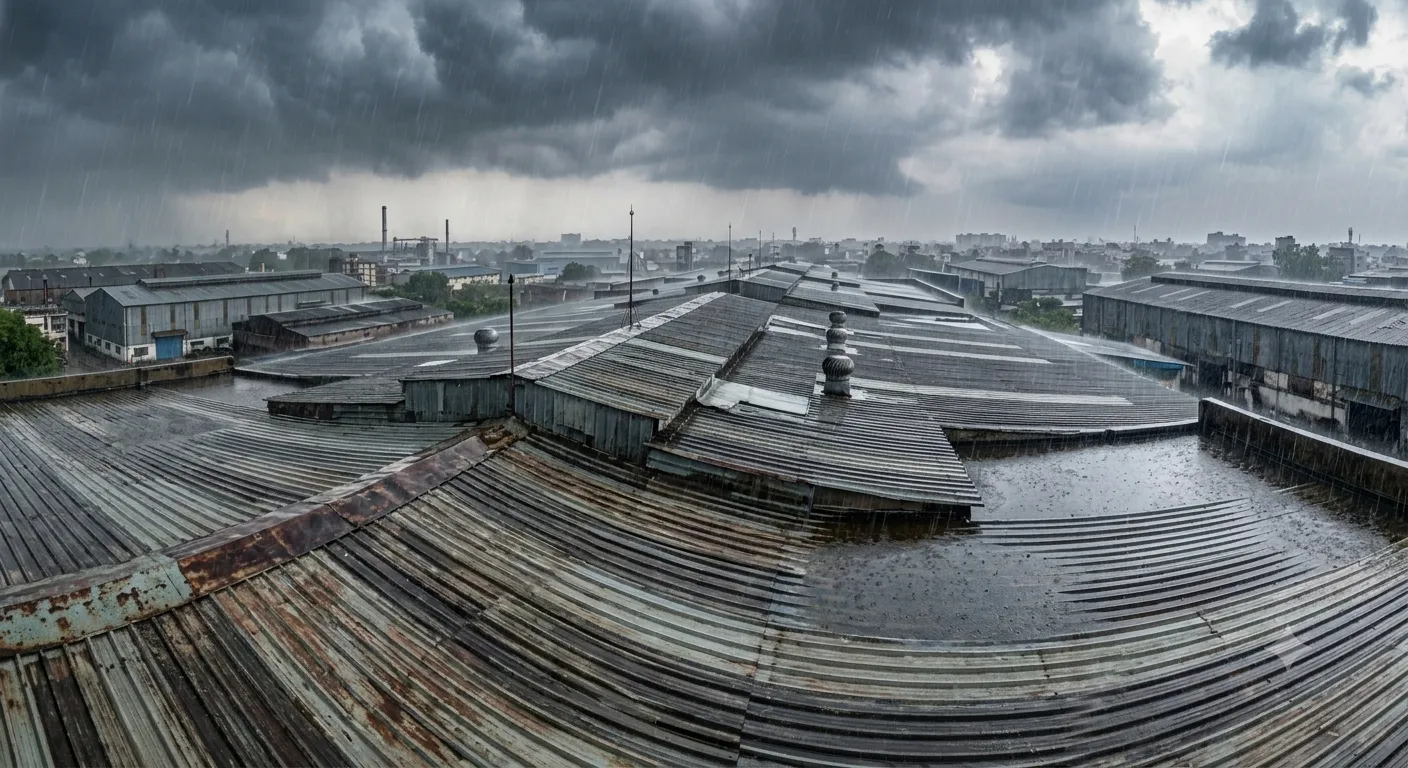
Uttar Pradesh is building fast. The state's 2026-27 GSDP is projected at ₹39.8 lakh crore, which is 28% growth over the revised 2025-26 estimate. (That's the whole economy, not just construction, so don't read it as a building boom number.) Still, more roads, warehouses and factories mean more roofs, and more people deciding what goes on top.
So what are your options? On one side, you've got the old guard: clay tiles, concrete slabs and asbestos sheets. On the other, modern colour-coated sheets, including PPGL roofing sheets, that are light, quick to fit and come in lots of colours and profiles.
Neither is perfect. Honestly, I'd say the right answer depends on your span, your budget, your timeline and how much you hate repair calls.
What This Guide Will Help You Sort Out
This article is written for project managers, site engineers and procurement heads who need facts, not sales talk. We'll compare cost, durability, weight, installation and compliance, side by side. I'll also flag where the data runs thin, because some numbers simply aren't published for Uttar Pradesh yet.
We'll also look at why working with a specialised manufacturer close to your site matters, whether that's a local supplier like RSG Profile Sheets or someone else you trust. Let's start with the traditional materials most of us grew up around.
Understanding Traditional Roofing Materials: The Old Guard
Before we compare anything, let's meet the three materials most of us grew up under. Clay tiles, concrete slabs and asbestos cement sheets have covered Indian buildings for generations. They're familiar. They're also showing their age.
The Three Familiar Faces
Clay or terracotta tiles are the classic village and bungalow roof. Think Mangalore tiles in red-orange rows. They look lovely and they've been around forever, but each tile is placed by hand on a frame of rafters and battens.
Concrete slabs (RCC) became the default for city buildings. Pour, cure, waterproof, done. Well, mostly done. The slab itself can last decades, but leaks, cracks and drainage trouble tend to show up long before the concrete gives out.
Asbestos cement sheets were the budget answer for sheds, godowns and factories for years. They were cheap, easy to find and everybody's contractor knew how to fit them.
Material | Typical dead load | Where you'll often see it |
|---|---|---|
Clay tiles with battens | About 66 to 73 kg/m² | Homes, farmhouses, heritage-style buildings |
RCC slab (125 mm, bare) | About 316 kg/m² | Offices, homes, multi-storey buildings |
RCC slab with finishes | Roughly 400 to 650 kg/m² | Same, once waterproofing and screed are added |
Asbestos cement sheets | Lighter than slabs, but brittle | Sheds, godowns, older factories |
Why People Still Pick Them
Honestly? Familiarity. Local masons know these materials cold, and nobody has to learn a new trade. Upfront material cost can also look low. Fibre or asbestos-type sheets start around ₹38 to ₹60 per sq ft, according to a 2026 supplier listing on TradeIndia. (That's a listing, not an official Uttar Pradesh average, so treat it as a rough guide.)
Tiles and slabs also have a solid, permanent feel. A slab gives you a walkable terrace and maybe room to build another floor later. That counts for something.
Where They Fall Short
Now the catch. And there are a few.
Weight. A bare 125 mm slab weighs roughly 3.1 kN/m², several times what a tiled roof does, according to an engineering dead load handbook. Heavier roofs mean bigger beams, columns and foundations. In earthquake-prone parts of North India, extra mass also raises seismic forces. That adds steel, concrete and time.
Brittleness. Tiles crack from impact, thermal cycling and rough handling. Guidance on traditional roofing in India notes that old country tiles leak more easily than interlocking ones. Breakage during transport and fitting is a real cost on big jobs, because you have to order extra and still lose some.
Asbestos. This is the big one. India hasn't issued a blanket national ban as of 2026, but the rules keep getting tighter. In September 2026, the CPCB issued a standard operating procedure covering installation, dismantling and disposal of asbestos cement sheets. Cutting, drilling or breaking them can release fibres, and waste may count as hazardous under the 2016 rules. So the cheap sheet today can become an expensive, paperwork-heavy removal job tomorrow.
So these materials aren't useless. They just carry baggage that matters on a deadline-driven site. Next, let's look at what the modern alternative actually is.
The Modern Solution: What Are Colour Coated Roofing Sheets?
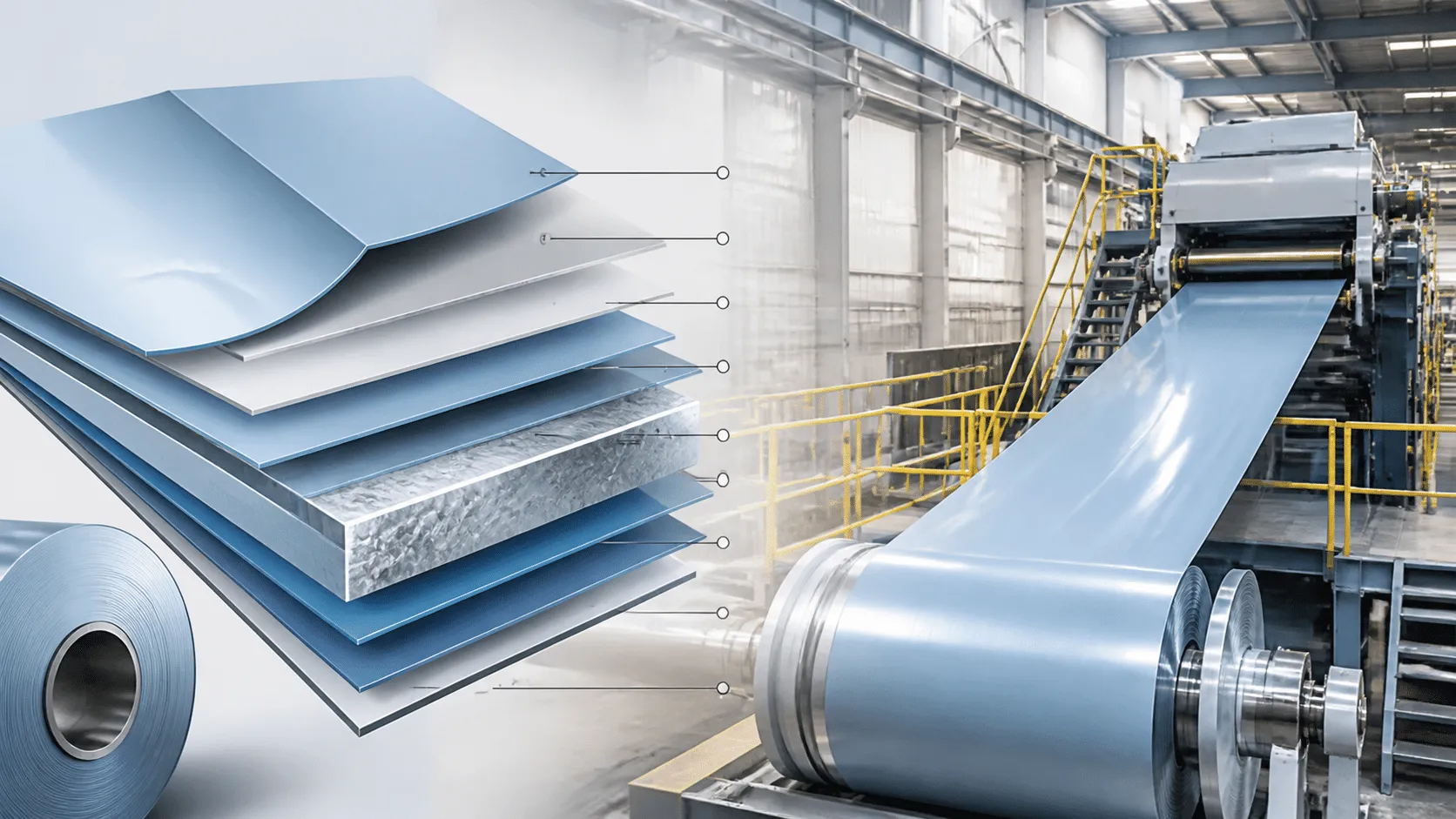
So what is a colour coated sheet, really? Think of it as a steel sandwich. A strong core, a metal shield on both faces, then layers of paint on top. Each layer has a job.
What's Inside the Sheet
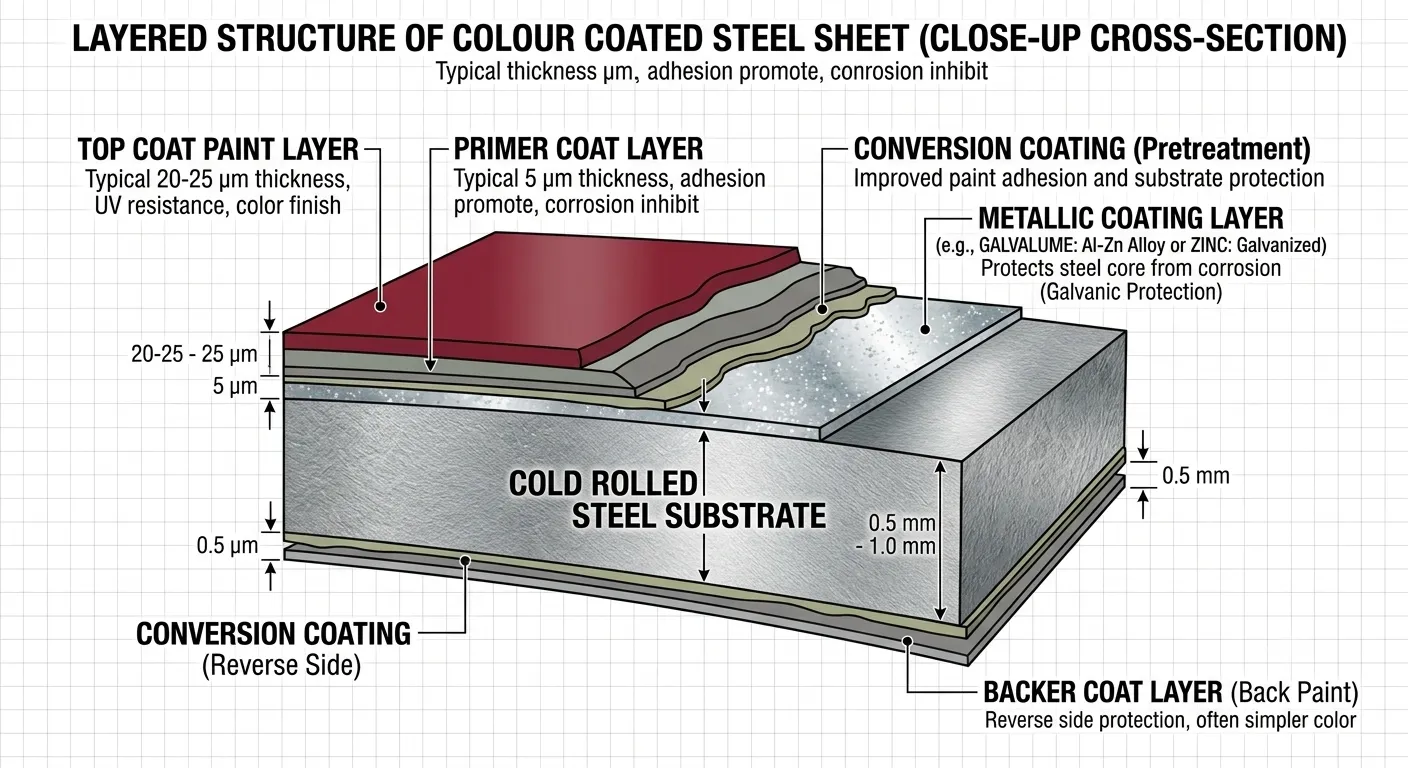
The core is steel. For PPGI, it's galvanized steel with a zinc coating. For PPGL roofing sheets, it's steel coated with aluminium and zinc, which many builders pick where weather is rough. The standard for the galvanized base is IS 277, and the paint finish on pre-painted galvanized sheets falls under IS 14246:2024. That standard sorts coatings into Class 1 to Class 4 by durability, based on tests like salt spray and humidity.
Here's how the layers stack up, top to bottom:
Layer | What it does |
|---|---|
Topcoat (polyester, SMP, SDP or PVDF) | Gives colour, resists sun and fading |
Primer | Helps the paint stick to the metal |
Pretreatment | Cleans the surface and prepares it for paint |
Metallic coating (zinc or aluminium-zinc) | Fights rust |
Steel core | Carries the load |
Back coat | Protects the underside |
Polyester is the budget pick. SMP and PVDF cost more but hold colour better under harsh sun and pollution.
Why the Factory Matters
These sheets are coated on a continuous line, then roll-formed into profiles. That's what keeps thickness and colour even from sheet one to sheet one thousand. Hand-painted work or a mixed-up batch can't match it.
This is where a specialised colour coated roofing sheet manufacturer in Kanpur earns its place. Ask for the mill test certificate, coating mass, base metal thickness and paint system. Don't mix up base metal thickness with total thickness (it's a common mistake). One JSW specification lists PPGL profiles from 0.35 to 0.60 mm and reports a 1000 hour salt spray pass. That's a lab result, not a promise of years on your roof, so treat it as a quality check.
The Three Big Benefits Up Front
Strength for the weight. Thin steel sheets carry a lot while loading your structure far less than a slab.
Rust resistance. The metal coating plus paint blocks moisture, which matters during a Kanpur monsoon.
Lots of choice. Colours, profiles and lengths can be picked per project. RSG Profile Sheets, for one, lists lengths "as required," which cuts offcuts and waste.
Sounds great, right? But good claims need numbers behind them. Let's put these sheets next to the old guard and see how they actually hold up.
Head-to-Head Comparison: Colour Coated Sheets vs. Traditional Roofing
OK, time to put these materials in the ring together. I'll keep this fair, because traditional roofing isn't the villain here. We'll look at five things buyers argue about most: durability, cost, installation, looks and maintenance. And I'll say so when the numbers aren't solid.
Durability and Weather Resistance
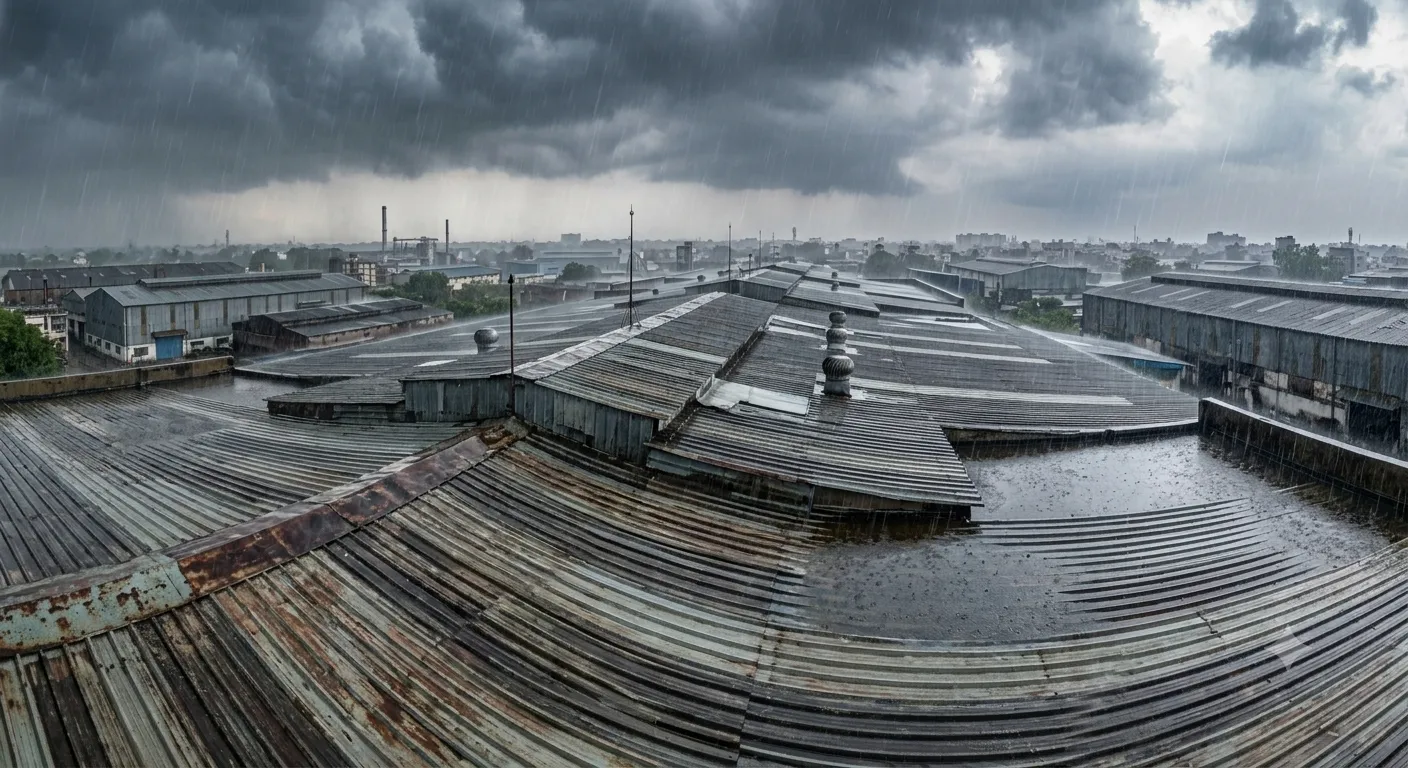
Monsoon is where roofs get exposed. According to a monsoon roofing guide from Mount Roof, leaks usually start at joints, laps and spots where pipes or vents poke through. Cracked tiles, ageing waterproofing coats and blocked gutters pile on after that.
So each material fails in its own way. Clay tiles crack and slip. RCC slabs develop hairline cracks and ponding. Asbestos sheets turn brittle, and breaking them creates a handling problem on top of a leak problem.
Colour coated steel fails differently. It doesn't crack from a bit of heat and cold, and the zinc or aluminium-zinc layer plus paint fights rust. But (and this matters) good coating can't rescue bad detailing. Poor slope, weak fasteners or sloppy overlaps will leak on any roof.
What about lifespan? I couldn't find a measured study for Kanpur. A fair planning range for quality PPGL in a polluted city is about 20 to 25 years, with proper installation and upkeep. Well-built clay tile roofs can go 50 years or more. So tiles may win on raw years, but they're heavy, brittle and slow to put up.
Cost and Installation Time
Let's talk money. Prices below come from supplier listings, not official Uttar Pradesh averages, so please treat them as rough guides.
Colour coated sheets: a Pratapgarh dealer listing shows Tata roofing sheets at ₹50 to ₹150 per sq ft, depending on spec.
Fibre or asbestos-type sheets: about ₹38 to ₹60 per sq ft (from the listing we saw earlier).
Clay tiles: roughly ₹150 to ₹350 per sq ft, and the higher figure comes from Jaipur, not UP.
So asbestos-type sheets look cheapest on paper. But that's material only. Add disposal rules, special handling and a future removal bill, and the gap shrinks fast.
The bigger saving often hides in the structure. One 2026 market report says metal roof decking can cut structural steel needs by 20% to 30% against concrete decking. That's not a design rule. A structural engineer has to run your actual numbers. I'd budget a conservative 20% and then check.
Time matters just as much. A 2026 Jaipur contractor comparison puts metal roofing at 3 to 5 days per 1,000 sq ft, against 7 to 10 days for clay tiles. That's a small residential-scale estimate, so don't multiply it blindly for a 10,000 sq m warehouse. But the direction is clear. Long, factory-cut panels go on faster than tiles placed one by one.
Looks and Design Choice
Some people assume metal means ugly. Honestly, that was true once.
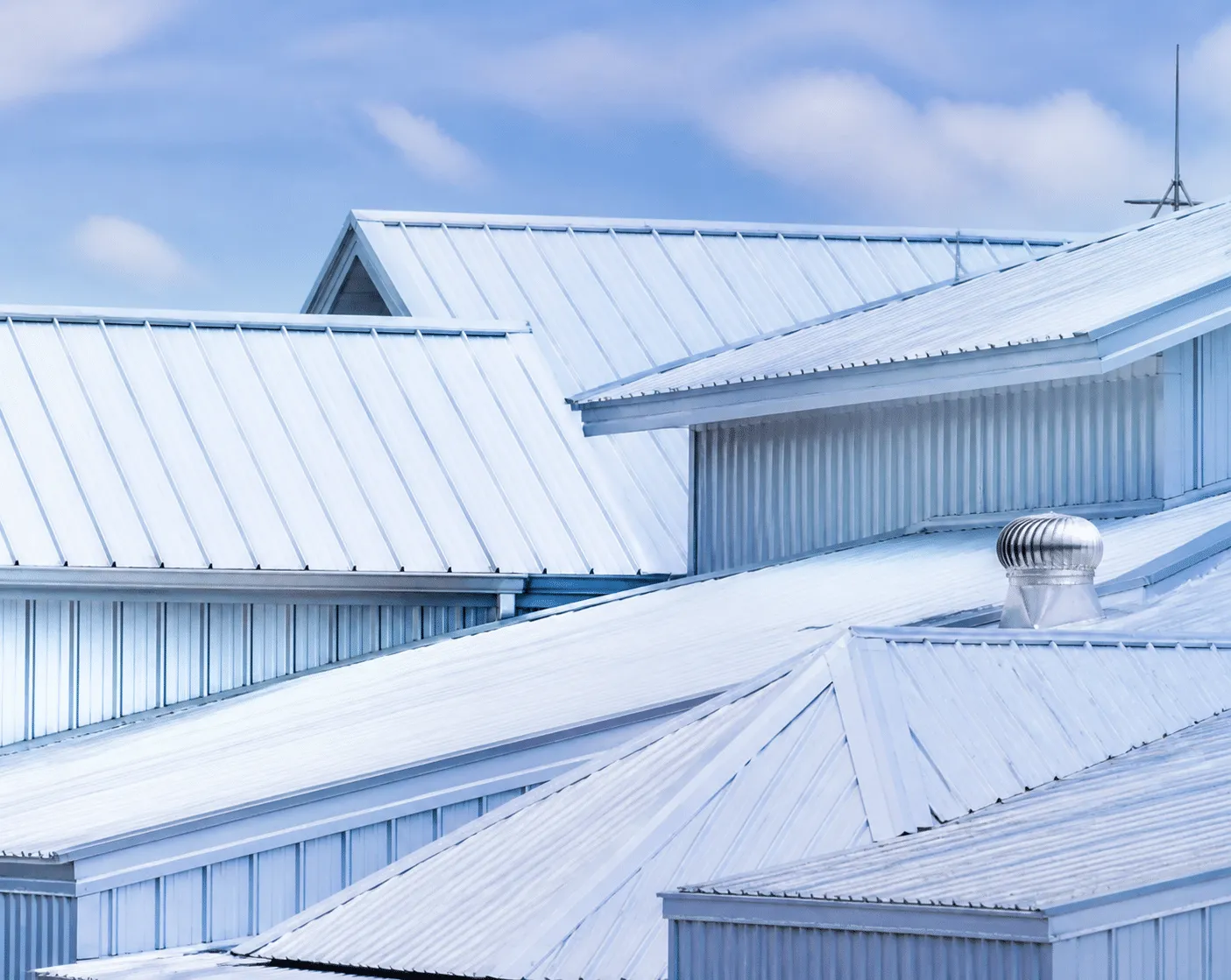
Colour coated sheets now come in trapezoidal, corrugated and tile-look profiles, in lots of colours. Reds, blues, greens and greys are common on industrial sites, while commercial buildings lean towards greys, whites and charcoal that match the walls. Suppliers can often cut sheets to custom lengths too. RSG Profile Sheets, for example, lists lengths "as required," so you're not fighting offcuts.
Tiles give you that warm, traditional look, and a slab gives you a clean flat terrace. Fair points. But if your building is a godown, a factory or a showroom, the colour and profile choice on coated sheets is hard to beat.
Maintenance Over the Years
Here's the thing nobody likes admitting: no roof is maintenance free.
Colour coated sheets need a look-over for loose fasteners, worn sealant, scratches and clogged drains. Fix a scratch early and it stays a scratch. Ignore it for three monsoons and it becomes rust.
RCC roofs need crack repair, waterproofing refreshes and clear drainage. Tiles need broken pieces swapped out and moss cleaned off. Asbestos sheets need the most careful treatment, because even routine repair can mean cutting or drilling.
So the real question isn't "which roof needs nothing?" It's "which roof's maintenance is cheap, quick and safe to do?" On that score, a well-specified sheet roof is simple to inspect and repair.
The Side-by-Side Summary
Here's everything in one place. Bookmark it for your next tender meeting.
Factor | Colour coated steel sheets | Clay tiles | RCC slab | Asbestos cement sheets |
|---|---|---|---|---|
Durability | Rust resistant coating, no cracking from heat cycles. About 20 to 25 years for quality PPGL in polluted areas (planning range) | Can last 50+ years, but brittle and prone to cracks and slipping | Concrete lasts decades, but waterproofing and cracks often fail first | Brittle with age, and rules for handling are getting stricter |
Cost (material, rough) | About ₹50 to ₹150 per sq ft | About ₹150 to ₹350 per sq ft | Heavy on concrete, steel and formwork | About ₹38 to ₹60 per sq ft, plus disposal risk |
Installation | Long panels, fast fitting. Roughly 3 to 5 days per 1,000 sq ft in one estimate | Slow, placed piece by piece. About 7 to 10 days per 1,000 sq ft | Pouring, curing and waterproofing take time | Quick to fit, but needs strict safety steps |
Looks | Many colours, profiles and custom lengths | Classic, traditional appearance | Plain, flat, walkable | Limited, basic grey |
Maintenance | Check fasteners, laps, sealants and drains | Replace broken tiles, clear moss | Crack repair, waterproofing, drainage | Hard to repair safely |
No roof wins every row, and I won't pretend otherwise. But if your priorities are speed, lower structural load and easy upkeep, the table leans one way. Next, we'll dig into each of these factors in more detail, starting with durability.
Factor 1: Durability & Weather Resistance
A roof in Kanpur has a rough year. May bakes it, the dusty winds scrub it, and then July and August soak it for weeks. Durability isn't one test. It's about three: impact, moisture and sun. So let's go through them one at a time.
Strength Under Impact and Wind
Steel's biggest edge is how it handles a hit. A thin steel sheet can flex and take a knock, while a clay tile or an old fibre sheet just cracks. Think of a dropped spanner during repairs, a branch in a storm, or a worker's boot in the wrong spot. A tile breaks. A coated sheet usually dents at worst.
Wind is where the difference gets interesting. In controlled testing, edge tiles on clay roof systems failed at 120 mph, which is about 193 km/h. That's a lot of wind, and plenty of tile roofs would never see it. But the failures started at the edges, which is exactly where cheap fixing cuts corners.
Quick fact: Clay tile edges failed at roughly 193 km/h in that test. Trapezoidal steel sheets don't have one universal km/h rating, though. Their wind capacity depends on thickness, profile depth, purlin spacing and screw pattern, so your structural engineer has to size it for your site.
I wish there were a neat number I could hand you here. There isn't. Anyone quoting a single wind rating for "standard" sheets is selling, not engineering. And I couldn't find hail data for Uttar Pradesh either, so I won't pretend to.
Rust, Pores and Pollution
Moisture is the quiet killer. Concrete tiles soak up water, and a roofing guide comparing clay and concrete tiles says that higher absorption makes moss and algae more noticeable in damp spots. RCC slabs have their own version of this problem. Water finds hairline cracks, creeps in, and eventually reaches the steel bars inside.
Colour coated sheets fight back with layers, as we saw earlier. The zinc or aluminium-zinc coating blocks rust first, then primer and paint seal it in. That matters in Kanpur, where acidic deposits and industrial dust sit on roofs and hold moisture.
But here's the catch. Monsoon roofing guidance from Laxree Roofing points out that corrosion around exposed fasteners can widen the original hole and give water a direct path in. Cut edges and scratches are the same story. A great sheet with weak screws still fails.
Stressor | Clay or concrete tiles | RCC slab | Colour coated steel |
|---|---|---|---|
Impact | Crack and chip easily | Strong, but surface cracks over time | Dents before it cracks |
Moisture | Porous, moss and algae grow | Cracks and failed waterproofing let water in | Sealed by metal coating plus paint, weak points are fasteners and cut edges |
Pollution and dust | Stains and surface weathering | Slow reinforcement corrosion if water reaches the steel | Needs the right coating system and regular cleaning |
Sun, Fading and Heat
The topcoat decides how a sheet looks in year ten. Plain polyester is the budget option and it fades sooner. According to a Jindal roofing sheet specification, SMP, super durable polyester and PVDF systems are all marketed for reduced fading and chalking under strong UV. For a godown on a ring road, SMP is probably plenty. For a showroom the whole city sees, PVDF might be worth the extra rupees.
Heat is a separate question. Lighter colours can cut solar heat gain, and one supplier listing for JSW sheets leans on that point. Still, a bare sheet isn't automatically cool. Insulation, ventilation and roof direction matter more than the colour name. A dark tile roof and a dark metal roof can both cook the room underneath.
So what should you ask your supplier? Not "is it durable?" Everyone says yes. Ask for the base metal thickness, coating mass, paint system and coating class, plus the salt spray report. RSG Profile Sheets lists PPGL and colour coated options, so that's the kind of paperwork to request from any Kanpur manufacturer you're comparing.
Durable roofs still have to pay for themselves, so next we'll look at what they cost over time.
Factor 2: Cost Analysis: Upfront Investment vs. Lifecycle Value
Here's a question I wish more tender committees asked. What will this roof cost us over 20 years, not just on the day we buy it?
Most comparison sheets stop at the rate per square foot. That's understandable, because it's the number everyone can see. But it's also the number that fools people the most.
Why the Cheapest Sheet Isn't Always the Cheapest Roof
On paper, fibre or asbestos-type sheets win the first round at about ₹38 to ₹60 per sq ft. Colour coated steel sits higher, and clay tiles higher still. If you stop reading there, you'd buy the cheap one every time.
But look at what that figure leaves out. It's material only. It skips framing, fasteners, transport, labour, safety gear, and the removal bill that may land years later. We covered the asbestos handling rules earlier, so you already know that last one isn't small.
Pricing for colour coated sheets is also messy, and I'll admit it confused me at first. Some sellers quote per sq ft, others by weight. A Kanpur directory listing, for example, quotes 0.56 mm colour coated GI at ₹1,05,000 per tonne, while Lucknow supplier listings show products at roughly ₹70 to ₹100 per kg. Those aren't directly comparable with a per sq ft rate. Thickness, profile, wastage and accessories change the math. So ask every bidder for a delivered rate on the same spec, same site.
Where Lighter Weight Saves Real Money
This is the part that surprises people. The sheet itself isn't where steel roofing saves you money. The savings show up around it.
Remember the dead loads from earlier? A bare RCC slab is around 316 kg/m², and a tiled roof is about 66 to 73 kg/m². Colour coated sheets weigh far less than either. Less weight means lighter purlins, smaller foundations and less concrete poured on site. The 20% to 30% structural steel reduction we saw earlier is a market figure, not a design rule. I'd still budget a cautious 20% and let your structural engineer confirm it.
Transport follows the same logic. Lighter loads mean more area per truck, and long factory-cut panels arrive ready to fix. That's one reason a manufacturer close to your site, like RSG Profile Sheets in Kanpur, can make a real difference to delivered cost. I couldn't find a published freight comparison for Uttar Pradesh, so get two quotes and compare them yourself.
Then there's labour. Fewer lifts, fewer individual placements, and fewer days with a crew on the roof. Time is money on a site, and that Jaipur estimate of 3 to 5 days against 7 to 10 days per 1,000 sq ft hints at how fast the bill can grow.
The Long Game: Maintenance and Replacement
Now for the years after handover. Tile roofs need broken pieces swapped, ridges re-bedded and moss cleaned. RCC roofs need waterproofing refreshed and cracks sealed. Asbestos sheets are hard to repair safely at all.
Colour coated steel mostly asks for inspection. Check fasteners, laps, sealants and drains, and touch up scratches early. One published Jaipur model (for a 1,000 sq ft roof over 30 years) put metal at about ₹3,10,000 including repainting, and clay tile at about ₹4,15,000. That's one city's pricing, so please don't treat it as a Kanpur quote. But it shows the pattern: a higher starting price can still end up lower.
I couldn't find an India-specific 20-year model for all four materials side by side, so here's how the cost parts compare instead.
Cost part | Colour coated steel | Clay tiles | RCC slab | Asbestos-type sheets |
|---|---|---|---|---|
Material (rough) | ₹50 to ₹150 per sq ft | ₹150 to ₹350 per sq ft | Concrete, steel, formwork | ₹38 to ₹60 per sq ft |
Structural support | Lightest | Light, but needs a full frame | Heaviest, bigger beams and foundations | Light |
Installation time | Shortest | Longest of the sheet and tile options | Pouring and curing add weeks | Short, but strict safety steps |
Upkeep over time | Inspection, sealant, occasional repaint | Tile swaps, moss cleaning | Crack repair, waterproofing | Hard to repair safely |
End-of-life risk | Recyclable steel | Breakage, replacement | Demolition | Controlled removal and disposal |
None of this makes steel automatically cheaper. A badly detailed roof leaks and costs money on any material. But if you total the frame, the freight, the labour and 20 years of upkeep, the gap between the sticker prices often closes, and sometimes flips.
Cost only tells half the story, though. Next, let's look at how these roofs actually go up, and how safely.
Factor 3: Installation Efficiency & Safety
Here's a scene most site engineers know. The slab is cured, the crew is waiting, and the roofing material is still two trucks away. Every idle day costs you wages, rent on equipment and a bit of your sanity.
So how a roof goes up matters almost as much as what it's made of. Let's look at speed first, then safety.
Why Long Panels Beat Piece-by-Piece Work
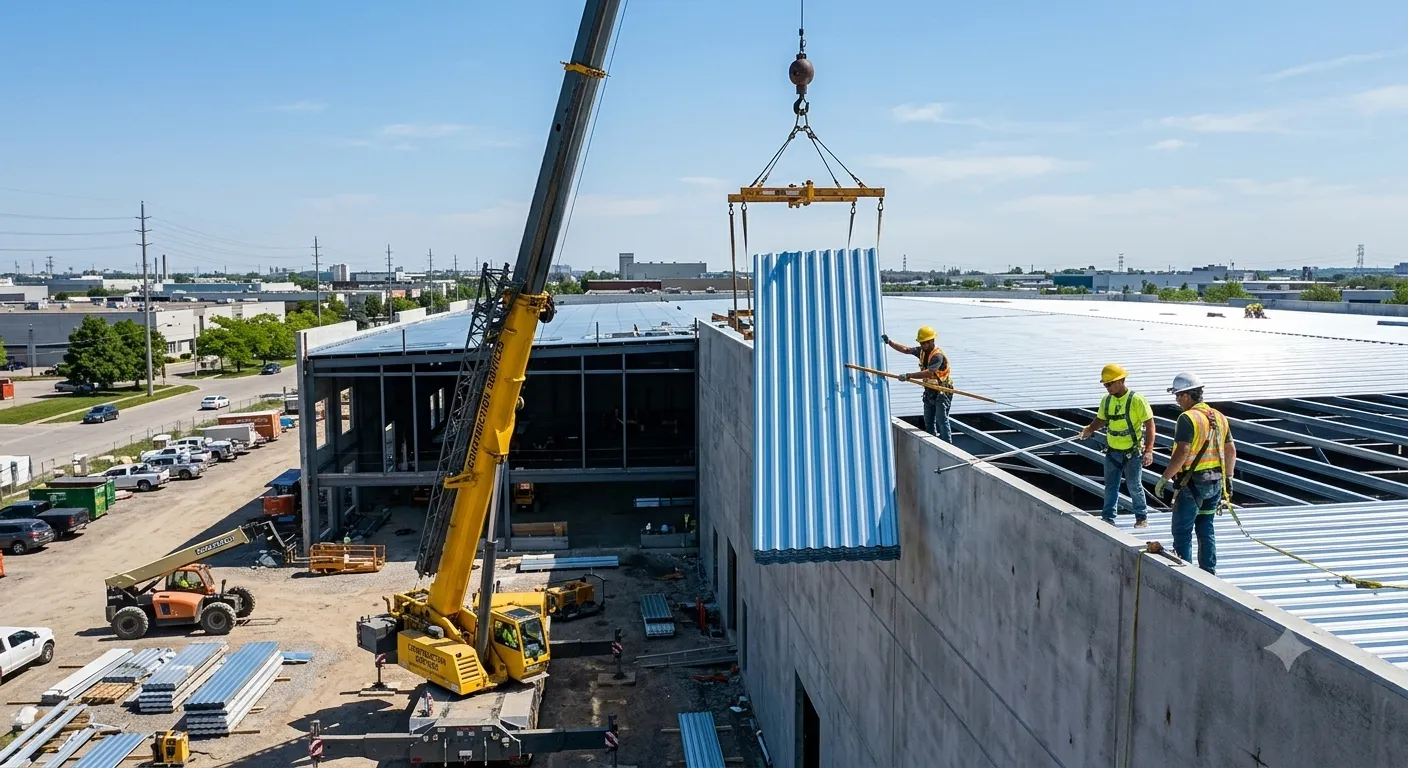
Colour coated profile sheets arrive cut to length. One panel can cover a big strip of roof in a single lift and a single line of fixing. Tiles don't work that way. According to a roofing types guide from Roofings.in, profile sheets go on in long panels, while clay tiles are placed and lined up one at a time.
Think about what that means on a 5,000 sq ft shed. Thousands of tiles means thousands of small decisions, each one a chance to crack something or set it crooked. A few dozen sheets means far fewer.
We covered the Jaipur estimate earlier: roughly 3 to 5 days per 1,000 sq ft for metal against 7 to 10 days for clay. I'd love to give you a verified Uttar Pradesh figure per 1,000 sq m. I can't, because nobody has published one. Treat the Jaipur numbers as a direction, then ask your own contractor for a crew-days estimate.
Fewer days on the roof also trims labour, which is a big part of roofing sheet installation cost in India. And there's less breakage. Tile jobs need extra stock because some pieces always crack in transport or fitting. Sheets still get scratched, but they rarely shatter.
Step | Colour coated profile sheets | Clay tiles |
|---|---|---|
Material arrival | Factory-cut lengths, stacked on pallets | Boxed or loose tiles, breakage common |
Lifting | Hoist or crane, several panels per lift | Carried up in small batches |
Fixing | Screws along purlins, sheet by sheet | Each tile set on battens by hand |
Cutting on site | Little, if lengths are ordered right | Frequent at ridges, hips and valleys |
Crew on the roof | Smaller team, shorter stay | Larger team, longer stay |
If you could film both jobs side by side, a time-lapse would show this clearly. The sheet roof closes in like a zipper. The tile roof fills in like a slow jigsaw puzzle.
What Speeds Up a Sheet Roof
The saving doesn't come from the steel alone. It comes from planning. A few things help a lot:
Order exact lengths, so there's less cutting and fewer offcuts.
Use a hoist or crane instead of hand-carrying long panels.
Use cordless screw guns with depth control, so washers don't get crushed.
Mark purlin lines and screw positions before the first sheet goes up.
Keep flashings and ridge caps ready, so nobody improvises at height.
One warning though. Follow the manufacturer's fixing manual for screw spacing, laps and purlin spans. Those change with profile and wind zone, and shortcuts are how leaks start.
The Safety Side Nobody Wants to Skip
Speed is nice. Going home in one piece is nicer.
Start with asbestos. Cutting, drilling or breaking those sheets can release fibres, and the September 2026 CPCB procedure we mentioned earlier asks for controlled handling, dust suppression and protective gear. The National Building Code of India 2016, Part 7 adds practical rules too. Workers shouldn't walk directly on asbestos-cement sheets. They need walking boards or ladders. Sheets should be lifted gently, never thrown, preferably by two people, and stacks shouldn't go above 1 m. India's National Asbestos Profile also recommends keeping asbestos dust out of the general work area and removing waste promptly.
That's a lot of paperwork and PPE for a roof that was supposed to be cheap.
Colour coated steel isn't risk-free, to be fair. Sheet edges are sharp, so gloves matter. Wet, coated sheets are slippery. Wind can grab a long panel like a sail, so work stops in high wind, rain or lightning. The NBC also calls for platforms and catch ropes during roof work, and that applies to metal roofs as much as any other.
But the hazards are the everyday kind, and crews can manage them with standard fall protection and good housekeeping. No fibres. No special waste stream.
Lighter materials also ease the physical strain. Lifting a few long panels with a hoist is a very different day from carrying tile after tile up a ladder, repeated for a week. Less strain means fewer injuries, and fewer injuries mean fewer stoppages.
A quick tip for your next tender: ask each bidder for a written method statement covering lifting, fall protection and wind limits. Their answer tells you a lot about how the job will really run.
Fast, safe installation only works if the right sheets arrive at the right time, so next we'll look at what a nearby manufacturer brings to the table.
The Strategic Advantage: Partnering with a Local Colour Coated Roofing Sheet Manufacturer in Kanpur
A great sheet is useless if it shows up three weeks late. I've seen crews sit idle with the purlins ready and the trucks still stuck somewhere on a highway. So who you buy from matters almost as much as what you buy.
Shorter Routes, Fewer Delays
Kanpur sits roughly 80 to 90 km from Lucknow by road. That's close enough for a same-week top-up if your site runs short. Here's a rough picture of the reach (distances are approximate, so check your actual route).
City | Rough road distance from Kanpur | Why it matters |
|---|---|---|
Lucknow | About 80 to 90 km | Next-day delivery is realistic for urgent top-ups |
Agra | About 280 km | One-day haul for warehouse and factory jobs |
Varanasi | About 330 km | Long, but still far shorter than a port-city run |
I couldn't find a published freight comparison for Uttar Pradesh, so I won't invent a saving. Ask a Kanpur maker and a distant supplier to quote the same spec, delivered to the same site. Then compare the totals. That's the only number that counts.
Talking to the People Who Make the Sheet
Here's where a local specialist beats a general trader. You can call the people running the roll-forming line and ask real questions about profile, thickness and lap details.
Custom lengths are a good example. RSG Profile Sheets lists its colour coated sheets with length "as required," which means fewer offcuts on your roof. Another Kanpur-region maker, Alviva Steels, says its sheets can be customised to client specifications. Good signs, but they're supplier claims. Exact colour matching, minimum order sizes and cut-length tolerances aren't confirmed anywhere I found, so get those in writing.
Also, ask to visit the plant. Watching a coil become a profile sheet tells you more than any brochure.
Same Spec, Every Truck
Traders often pull stock from several sources. That's how you end up with one batch a shade darker, or a thinner sheet than the first delivery. Buying direct from a manufacturer gives you one paper trail. Ask for the mill test certificate, base metal thickness, coating mass and paint system on every lot, and compare them against your tender.
One honest limit: the reviews I found are customer comments, not documented contractor case studies. So treat them as hints, and talk to two or three past clients yourself.
Benefits of a Local Manufacturing Partner
Shorter lead times and easy mid-job top-ups across Uttar Pradesh
Direct access to technical staff for profiles, lengths and colours
Fewer offcuts, since sheets are cut to your drawings
One batch trail for certificates and quality checks
Faster help if a delivery is damaged or a fixing question comes up
A weather resistant roofing sheet range from one accountable source
So a nearby maker solves supply, support and consistency in one go. Next, let's look at the compliance, safety and environmental side of the decision.
Ensuring Project Integrity: Compliance, Safety, and Environmental Impact
If you're signing off roofing for a school, warehouse, or factory, this is the part that can save you from a very annoying call later. The sheet may look fine on day one. But if it doesn't meet the right standard, or if it creates a safety mess, the whole job gets shaky.
What compliance should look like
For 2026 projects, the big thing is simple. Ask for proof, not promises. A serious colour coated roofing sheet manufacturer in Kanpur should be able to show the right BIS paperwork for the sheet, the coating, and the steel base.
Compliance check | What to ask for | Why it matters |
|---|---|---|
BIS standard | IS 14246:2024 for pre-painted sheets | Confirms the sheet meets current Indian rules |
Base metal | IS 277 or IS 15961, as applicable | Tells you what steel sits under the paint |
Batch proof | Mill test certificate | Helps match the lot to the spec |
Coating details | Coating class, paint type, thickness | Shows how the sheet should age |
Test report | Salt spray or similar report | Gives a clue about rust resistance |
Warranty | Written warranty terms | Makes claims easier to check later |
That checklist is handy for procurement managers, and honestly, it should be pinned near the tender file. No drama. Just documents.
Safety and fire issues
Steel roofing has a simple safety advantage: it does not burn the way many people fear roof materials do, and that matters a lot for industrial and commercial buildings. In plain words, a non-combustible roof gives you one less thing to worry about if a workshop, plant room, or electrical area ever has a fire.
Clay and concrete can also perform well in fire, but they bring other problems. Clay can crack. Concrete is heavy. Asbestos is the one that really raises eyebrows now, because handling and disposal need special care. So if you want safer day-to-day work on site, steel sheets are usually the easier call.
And yes, safety is not only about the material. Fixing details, edge trims, fasteners, and crew practice still matter. A good sheet used badly can still turn into a headache. Weird, right?
What about the environment
This part is getting more attention in 2026, especially on government and larger private jobs. Steel has a strong recycling story. It can be collected, melted, and used again, which makes it a smart pick for builders trying to cut waste over the long run.
Asbestos is the opposite problem. Once it becomes damaged or old, it can turn into a hazardous waste issue. Concrete and clay also use a lot of raw material and energy before they ever reach site. So if your team cares about cleaner sourcing and lower waste at end of life, coated steel is usually the easier material to defend in a review meeting.
Quick procurement note: if you're comparing suppliers, ask for the standard, the test report, the coating type, the warranty, and the recycling path for offcuts. That tiny list can save a lot of back-and-forth later.
And next, we'll pull all of this together into one final recommendation.
The Final Verdict: Building for the Future with Modern Roofing
So here’s the short version. If your project needs a roof that goes up fast, stays lighter on the structure, and gives you more control over looks and long-term upkeep, colour coated sheets usually win. That’s the big story. Not flashy. Just practical.
Why the modern choice keeps pulling ahead
Traditional roofing still has its place, sure. But for warehouses, factories, showrooms, and other busy sites, modern roofing solutions vs traditional options usually come out ahead on planning, speed, and maintenance. PPGL roofing sheets India buyers often choose them because they handle weather better, give more design options, and fit tighter schedules.
And that matters. A roof is not just a cover. It’s part of the project strategy.
What smart buyers ask next
If you’re comparing commercial building roofing options, ask three things:
Question | Why it matters |
|---|---|
How much load will the roof add? | Lighter roofs can reduce support needs |
How long will it last in local weather? | Heat, dust, and rain change everything |
Who will support the job after supply? | Good service saves site headaches |
That’s why working with a colour coated roofing sheet manufacturer in Kanpur like RSG Profile Sheets can be a solid move. A nearby profile sheet manufacturer in Uttar Pradesh can help with custom lengths, quicker delivery, and fewer surprises on site.
Ready to talk through your project?
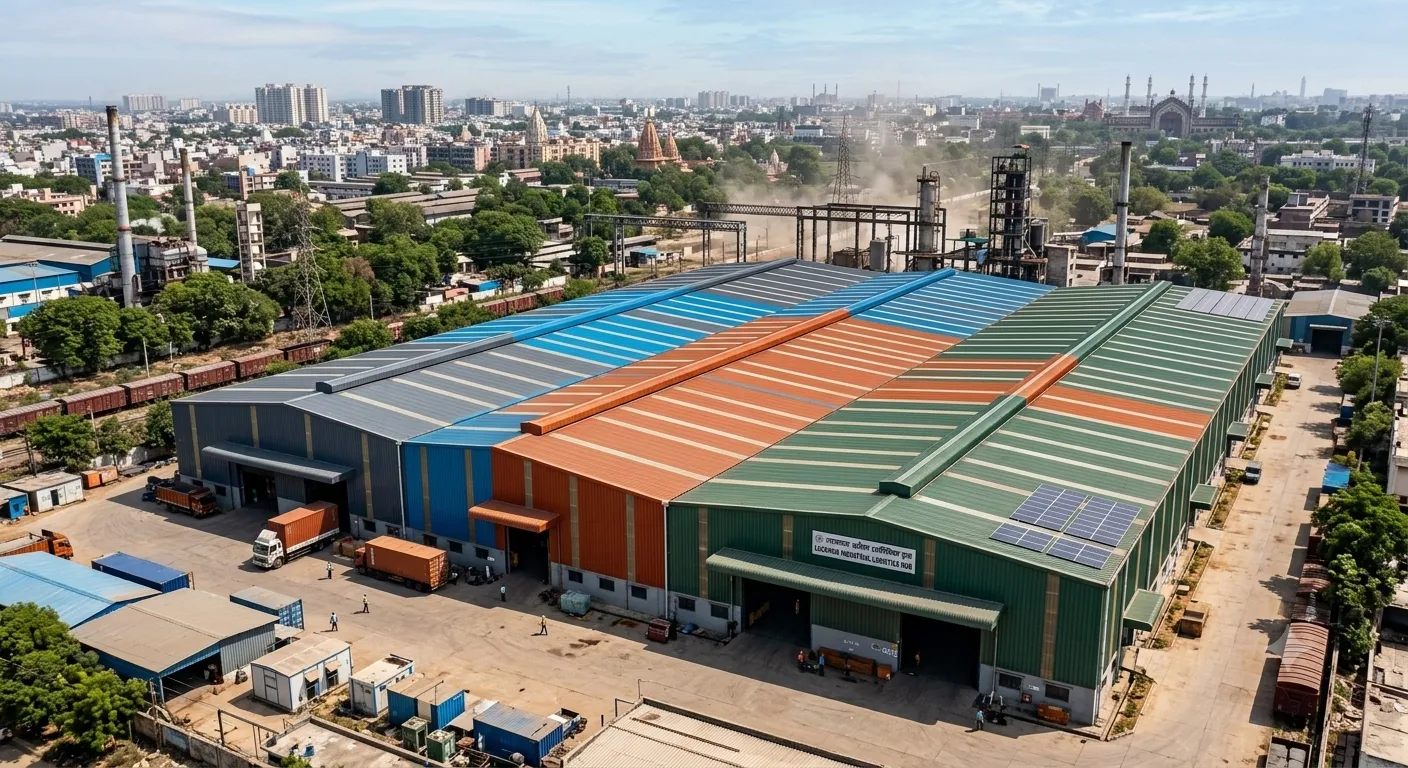
If you want a roof that fits your budget, span, and timeline, talk to a roofing expert before you lock the order. Get a project review, ask for a spec check, and compare the full installed cost, not just the sheet price.